

Choosing Blinds That Work Beautifully in Every Room
Blinds have remained a dependable choice for homeowners because they offer something many window coverings cannot: precise control over both light and privacy. A small adjustment to the slats can brighten a room, reduce glare, or block the view from outside without requiring the entire covering to be raised or lowered.
Their clean lines can complement traditional, modern, transitional, and minimalist interiors. They are also available in different materials, slat sizes, colors, and operating styles, making them adaptable to nearly every room in the home.
Choosing the right blinds requires more than finding a color that matches the walls. The room’s purpose, moisture level, window size, sunlight exposure, and daily routine should all influence your decision. This room-by-room guide can help Cook County homeowners identify which features matter most before placing an order.
Why Blinds Remain a Practical Choice
Blinds use adjustable horizontal or vertical slats to manage the amount and direction of incoming light. Tilting the slats upward can reduce direct visibility from outside while allowing daylight to enter. Tilting them downward can help control glare and provide a clearer outdoor view.
They can also be raised or moved aside when a completely open window is preferred. This flexibility makes them useful in rooms where lighting and privacy needs change throughout the day.
Other reasons homeowners continue to choose blinds include:
- Adjustable light control
- Flexible daytime and evening privacy
- A wide range of materials and colors
- Options for windows and sliding doors
- Simple, structured appearance
- Compatibility with many decorating styles
- Easier surface cleaning than some fabric treatments
The best results come from matching the material and configuration to the room rather than using the same product throughout the entire house.
Match Your Blinds to the Room
Each space presents a different combination of light, privacy, moisture, and maintenance needs. Looking at the home one room at a time can make the selection process more manageable.
Living Rooms and Family Rooms
Living areas often contain some of the largest and most visible windows in a home. The blinds selected for these rooms should support everyday comfort while complementing the furniture, flooring, and architectural details.
Wood or wood-look blinds can add warmth and visual structure to a living room. Wider slats can create a more open view when tilted and may suit larger windows. Neutral finishes such as white, cream, gray, or natural wood tones can coordinate with changing décor over time.
Consider how sunlight moves through the room. If strong afternoon light reaches a television or seating area, adjustable slats can help reduce glare without making the space completely dark.
Kitchens and Dining Areas
Kitchens need window coverings that can handle regular activity and occasional exposure to heat, humidity, grease, or splashes. A material that is easy to wipe clean may be more practical than an option that requires specialized care.
Faux wood and aluminum blinds are commonly considered for kitchens because their smooth surfaces can be maintained with routine dusting and gentle cleaning. Faux wood provides the visual warmth of natural wood while generally being better suited to changing moisture levels.
For a window near a sink or food preparation area, look closely at how the material responds to water. Natural wood may not be the best choice for a location exposed to frequent moisture.
Dining rooms allow more flexibility. Blinds can be selected to coordinate with cabinetry, dining furniture, trim, or flooring while still providing privacy during evening meals.
Bedrooms
Privacy and light control are usually the main priorities in a bedroom. Blinds allow homeowners to limit outside visibility while adjusting the room’s brightness throughout the day.
Pay attention to the small spaces around the edges of the product and between the slats. Blinds can reduce incoming light, but they may not create complete darkness on their own. Homeowners who prefer a darker sleeping environment may want to pair them with room-darkening curtains or another layered treatment.
Cordless operation can provide a clean appearance and convenient daily use. It is also an important consideration for bedrooms used by young children.
Home Offices
A home office needs balanced lighting that supports concentration without creating uncomfortable screen glare. Blinds can redirect sunlight away from computer monitors while preserving some natural illumination.
The direction of the slats matters. Experimenting with different tilt positions can help spread daylight toward the ceiling or floor instead of directly across the workspace.
Choose a finish that supports the professional character of the room. Clean whites and grays can create a simple background, while wood tones can make the office feel warmer and more inviting.
Bathrooms and Laundry Rooms
Bathrooms and laundry areas can experience regular humidity and changing temperatures. Moisture-resistant materials are generally more suitable for these spaces than untreated natural wood.
Faux wood, vinyl, and aluminum options can provide privacy while offering surfaces that are easier to maintain. Make sure the selected product provides dependable coverage from outside, especially after sunset when the interior lights are on.
Light-colored blinds can help smaller utility spaces feel brighter, while darker finishes may create a more defined contrast against light walls and trim.

Compare Popular Blind Materials
Material affects the appearance, weight, maintenance requirements, and suitable placement of a blind. Understanding these differences can help prevent choosing a product that looks attractive but does not perform well in its intended room.
Natural Wood
Wood blinds bring organic color, texture, and warmth into a space. They can work especially well in living rooms, dining rooms, bedrooms, and offices where moisture is limited.
Different stains and painted finishes allow wood blinds to coordinate with floors, furniture, cabinetry, and interior trim. Because natural wood can respond to humidity, it should be selected carefully for kitchens, bathrooms, and other damp spaces.
Faux Wood
Faux wood blinds provide a wood-inspired appearance using materials designed for easier maintenance and improved moisture resistance. They are a practical option for active households and rooms that require frequent cleaning.
These blinds can be heavier than natural wood, particularly across wide windows. Very large openings may need more than one blind to improve operation and reduce
stress on the headrail.
Aluminum
Aluminum blinds have slim slats and a lightweight profile. They are available in many neutral and decorative colors, making them suitable for offices, kitchens, utility rooms, and contemporary interiors.
Their smooth surface is relatively easy to dust. However, the slats should be handled carefully because strong pressure can bend or crease them.
Vertical Blinds
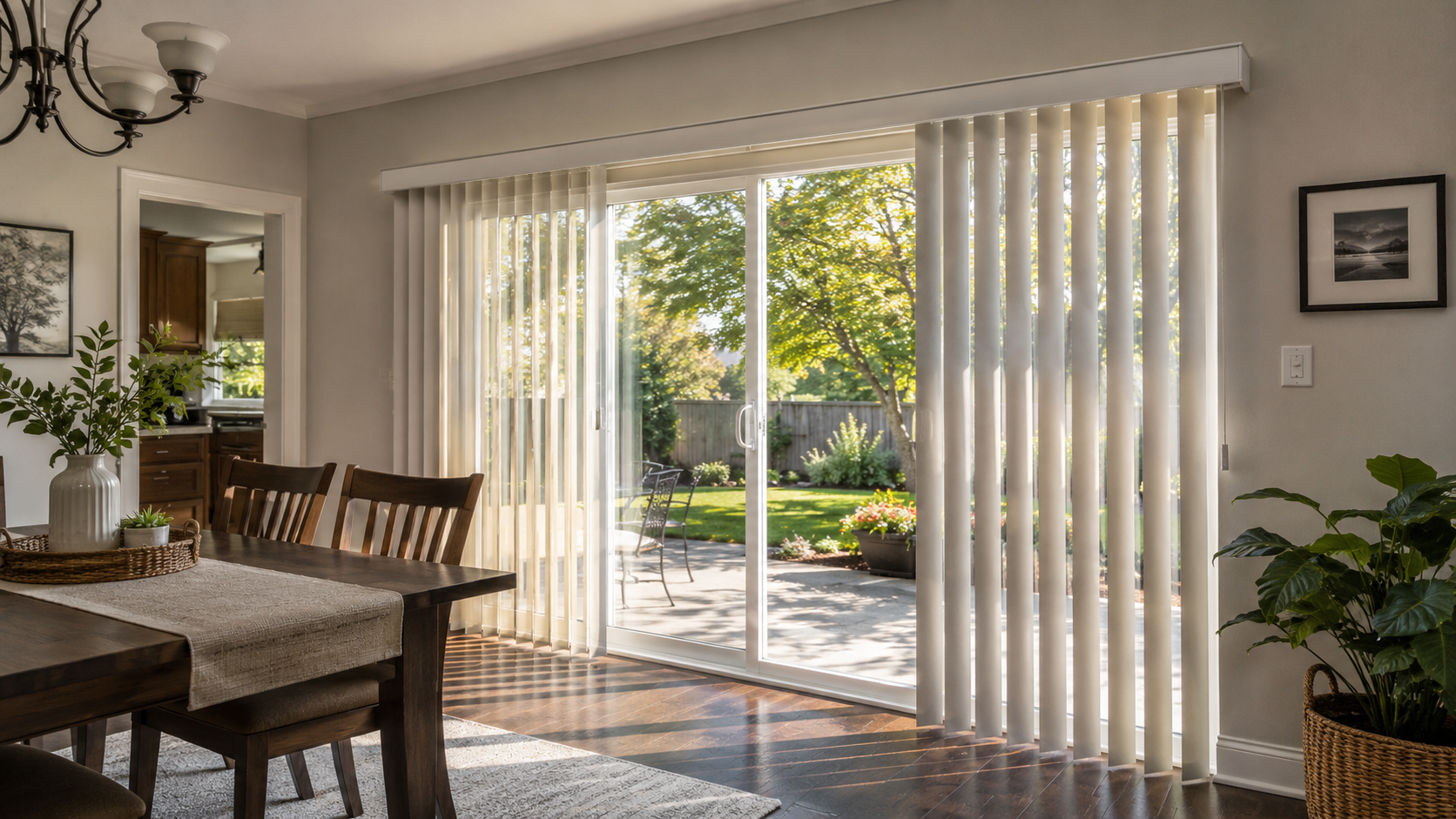
Vertical blinds use individual vanes that move from side to side. They are commonly used for sliding glass doors, patio doors, and wide window openings.
The vanes can be rotated for privacy and light control or moved aside for access to the door. When selecting vertical blinds, consider the direction in which the door opens and where the stacked vanes will sit when fully opened.
Pay Attention to Fit and Proportion
Even a carefully selected material can look unfinished if the blinds do not fit the window correctly. Accurate measurements and appropriate proportions contribute to smoother operation and more consistent coverage.
Inside and Outside Mounting
Inside-mounted blinds sit within the window frame and create a neat, built-in appearance. This method requires enough frame depth to support the headrail and operating components.
Outside-mounted blinds attach above or around the window opening. They may be useful when the frame is too shallow, when the window is uneven, or when additional coverage is preferred.
Measure the width, height, and depth of every window individually. Do not assume two nearby windows have identical dimensions, even if they appear the same.
Selecting a Slat Size
Narrow slats create a detailed, traditional appearance and may suit smaller windows. Wider slats produce stronger horizontal lines and can provide a more open outdoor view when tilted.
The dimensions of the window should guide the decision. Wide slats may overwhelm a very small opening, while narrow slats can appear visually busy across an expansive window.
Coordinating the Color
Blinds can match the surrounding trim for a seamless look or contrast with it to create a stronger design statement. White and neutral finishes tend to remain versatile as wall colors and furnishings change.
Wood tones can connect the windows to flooring, cabinetry, or furniture. Before ordering, compare samples inside the room at different times of day. Natural and artificial lighting can noticeably affect how a finish appears.
Choose an Operating Style for Daily Use
Think about how often each window will be opened, closed, raised, or tilted. A window covering used several times every day should be convenient to operate.
Cordless blinds can be raised or lowered by hand, creating a clean appearance without loose cords. Motorized options may be helpful for high, wide, or hard-to-reach windows. They can also make it easier to adjust several coverings in a room.
Households with children or pets should prioritize safer operating designs. Review the product’s control system and installation requirements before purchasing.
Keep Blinds Looking Their Best
Routine care can prevent dust from building up across the slats. Close the blinds and wipe them gently with a microfiber cloth or use a vacuum with a soft brush attachment. Reverse the slat direction to clean the opposite side.
Avoid harsh cleaning products unless they are recommended for the specific material. Use minimal moisture on natural wood, and dry any damp surfaces promptly.
Check the brackets, headrail, and controls periodically. Addressing an operating issue early may prevent unnecessary strain or additional damage.
Find Blinds That Fit Your Home and Routine
The right blinds should make a room easier to enjoy. They should provide the privacy you need, control sunlight throughout the day, and complement the surrounding interior without creating unnecessary maintenance.
My Window Shades offers Cook County homeowners access to a curated online selection of window coverings, including options from trusted brands such as Hunter Douglas. Whether you are updating one room or coordinating treatments throughout your home, comparing materials, measurements, slat sizes, and controls will help you make a more informed choice.
Browse the collection at My Window Shades or contact the team for assistance choosing blinds that fit your windows, your décor, and the way you live.